

Depuncturing · K = 7 · rate 3/4

Two Viterbi decoders in hardware
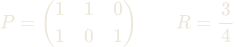
FengYun-3 protects its data with the CCSDS K = 7 convolutional code, punctured to rate ¾, on both QPSK branches. FY3magic runs both Viterbi decoders inside the FPGA — one trellis step per clock, soft decisions, in real time.
Before a decoder can work it must know where the puncturing pattern starts, which decoder output comes first and whether the bit stream is inverted. A new concept here: the FPGA works all of that out by itself — node synchronisation in hardware, no help from the host, re-acquired within milliseconds after a fade.
Erasures from the puncturing carry no weight in the metrics, exactly as in a software decoder — so the FPGA reaches the same threshold as SatDump's own decoder.
Convolutional code (K = 7)
Puncturing to rate 3/4
Add-compare-select (64 states)